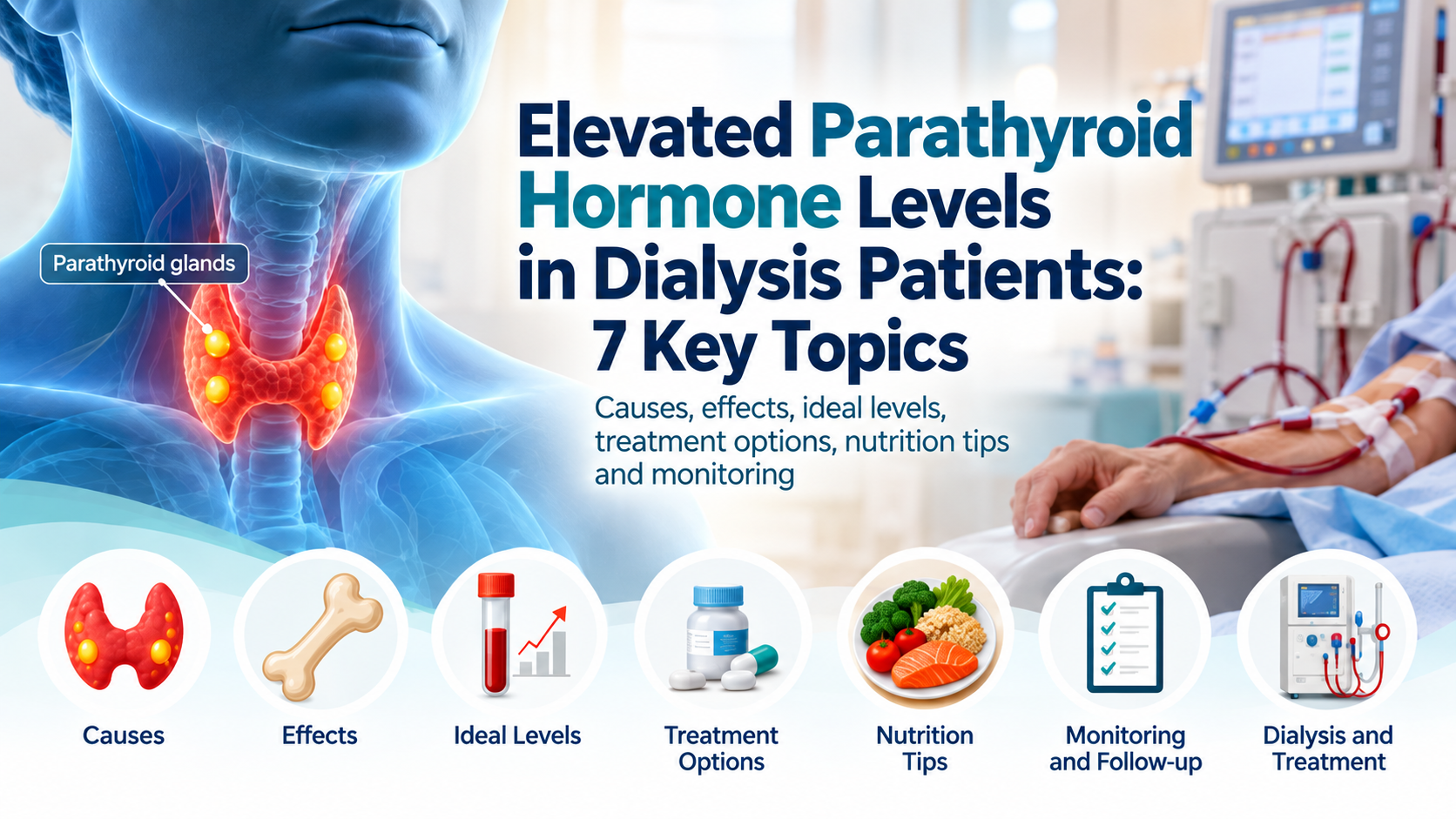
7 Important Effects of Elevated Parathyroid Hormone Levels in Dialysis Patients
The kidneys not only remove waste products from the blood; they also play a key role in maintaining the balance of calcium, phosphorus, and vitamin D. A significant decline in kidney function can disrupt this delicate balance and lead to various hormonal changes.
Elevated parathyroid hormone (PTH) levels in dialysis patients are one of the significant hormonal issues that can develop as a result of chronic kidney disease. Prolonged elevation of PTH levels can negatively affect bone health, disrupt mineral metabolism, and increase the risk of vascular calcification in some patients.
So, what causes elevated parathyroid hormone levels in dialysis patients? What symptoms does it cause, and how can it be managed?
In this article, we will discuss the functions of parathyroid hormone in the body, the causes of elevated levels in dialysis patients, its potential effects, and current treatment approaches under seven main headings.
1. What Is Parathyroid Hormone (PTH) and Why Is It Important for Dialysis Patients?
Parathyroid hormone (PTH) is a hormone secreted by the parathyroid glands, located behind the thyroid gland in the neck, that plays a role in regulating blood calcium levels. This hormone, which affects bone, kidney, and vitamin D metabolism, plays an important role in maintaining the body’s mineral balance.
In healthy individuals, parathyroid hormone secretion is regulated by blood calcium levels. When calcium levels drop, the parathyroid glands secrete more PTH in an effort to restore balance.
However, in advanced-stage chronic kidney disease, this regulatory mechanism may be disrupted.
What Are the Main Functions of Parathyroid Hormone in the Body?
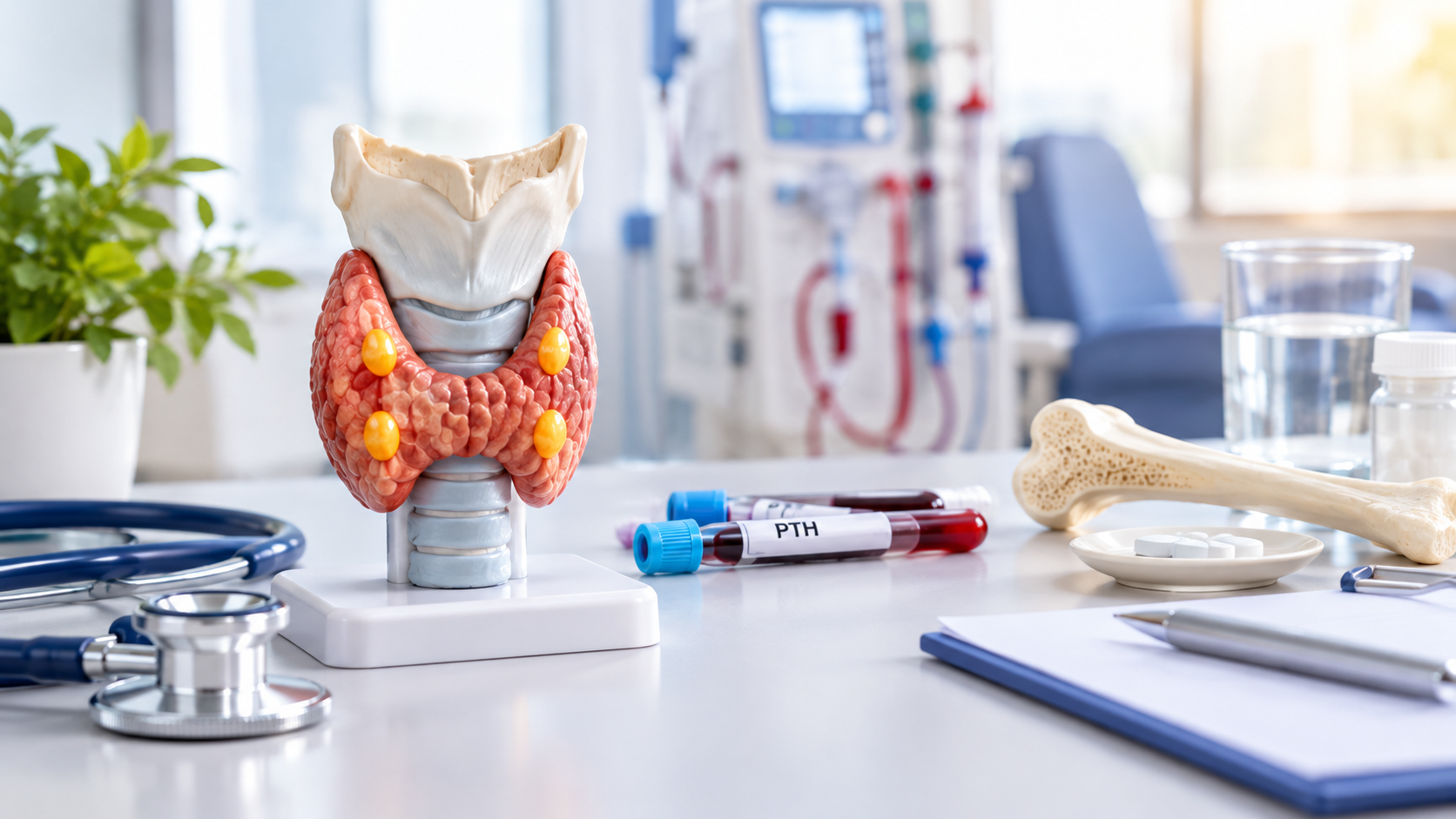
The main functions of parathyroid hormone are as follows:
- Regulating calcium balance: Helps maintain calcium levels in the blood.
- Regulating bone metabolism: It affects the processes of bone formation and resorption.
- Increasing phosphorus excretion: Supports phosphorus excretion through urine in healthy kidneys.
- Affecting vitamin D metabolism: It contributes to calcium absorption in the intestines by stimulating the formation of active vitamin D in the kidneys.
As kidney function declines significantly, it becomes more difficult for the body to eliminate phosphorus. In addition, the production of active vitamin D may decrease, and calcium balance may be disrupted.
These changes may stimulate the parathyroid glands, leading to increased PTH secretion.
Why Is Elevated Parathyroid Hormone More Significant in Dialysis Patients?
Elevated parathyroid hormone levels in dialysis patients do not simply mean that a single laboratory value is above the normal range.
Prolonged and inadequately controlled elevated PTH levels can lead to an excessive acceleration of the bone turnover process and, over time, to a weakening of bone structure.
In some patients, this condition may be associated with bone pain, an increased risk of fractures, and disorders of mineral metabolism.
However, not all elevated PTH levels are equally dangerous. PTH levels in dialysis patients are interpreted differently than in healthy individuals. Treatment decisions are not based on a single measurement; instead, they are made by evaluating changes in PTH over time, along with calcium, phosphorus, and other clinical findings.
Detailed scientific recommendations on this topic, It is included in the KDIGO Guidelines on Mineral and Bone Disorders in Chronic Kidney Disease.
2. What Causes Elevated Parathyroid Hormone Levels in Dialysis Patients?
The most important causes of elevated parathyroid hormone levels in dialysis patients are phosphorus accumulation, decreased production of active vitamin D, and impaired calcium balance. These changes can cause the parathyroid glands to secrete more hormone than normal.
This condition, which arises as chronic kidney disease progresses, is known in medicine as secondary hyperparathyroidism.
Elevated parathyroid hormone levels in dialysis patients are not usually caused by a single factor. Various interrelated metabolic changes can lead to a gradual increase in PTH levels over time.
How Does High Phosphorus Affect Parathyroid Hormone Secretion?
Phosphorus is a mineral essential for the healthy functioning of bones, teeth, and cells. Healthy kidneys remove excess phosphorus that the body does not need through urine.
However, when kidney failure develops, phosphorus excretion decreases. Blood phosphorus levels may rise, particularly in advanced-stage kidney disease.
Phosphorus accumulation contributes to increased PTH production by affecting the parathyroid glands through both direct and indirect mechanisms.
Elevated phosphorus levels that remain uncontrolled for a long time:
- An increase in parathyroid hormone secretion,
- Disruption of bone and mineral metabolism,
- A negative impact on the calcium-phosphorus balance,
- An increased risk of calcification in blood vessels and soft tissues
can contribute.
For this reason, it is necessary to regularly monitor not only PTH levels but also serum phosphorus levels in dialysis patients.
Does Vitamin D Deficiency Cause Elevated PTH Levels?
Yes. Disorders of vitamin D metabolism are among the major causes of elevated parathyroid hormone levels in dialysis patients.
One of the kidneys’ functions is to convert vitamin D into its active form, which the body can use. Active vitamin D supports calcium absorption in the intestines and helps regulate hormone secretion by the parathyroid glands.
In advanced kidney failure, the production of active vitamin D decreases.
As a result:
- Calcium absorption from the intestines may decrease.
- Calcium balance in the blood may be disrupted.
- The parathyroid glands may secrete more PTH.
- Undesirable changes in bone metabolism may occur.
However, there is an important detail to note here: Vitamin D therapy for dialysis patients is not planned based solely on vitamin deficiency. Calcium, phosphorus, and PTH levels must be evaluated together. Inappropriate use of medications containing active vitamin D can lead to elevated calcium and phosphorus levels.
How Does an Imbalance in Calcium Levels Affect Parathyroid Hormone?
Calcium is important not only for bone health but also for muscle function, nerve transmission, and heart function.
The parathyroid glands are highly sensitive to changes in blood calcium levels.
When the level of ionized calcium in the blood decreases, the parathyroid glands secrete more PTH in an effort to raise calcium levels.
In dialysis patients, this process can become more complex because the kidneys are unable to adequately regulate mineral balance.
However, in some dialysis patients, blood calcium levels may be normal or even elevated despite elevated parathyroid hormone levels. Therefore, elevated parathyroid hormone levels cannot be ruled out based solely on the calcium result.
What Is Secondary Hyperparathyroidism?
Secondary hyperparathyroidism is a condition in which the parathyroid glands produce excessive amounts of PTH in response to another disease or metabolic disorder.
In dialysis patients, the most common cause of this condition is disturbances in mineral metabolism resulting from chronic kidney disease.
If the condition persists for a long time, the parathyroid glands may enlarge. In some patients, the glands may become less sensitive to changes in blood calcium and phosphorus levels.
This can make it difficult to control elevated parathyroid hormone levels.
In chronic and severe cases, tertiary hyperparathyroidism may develop as the parathyroid glands begin to produce hormones more independently.
Elevated parathyroid hormone levels may not always cause symptoms in dialysis patients. Therefore, regular monitoring of laboratory values such as PTH, calcium, phosphorus, and alkaline phosphatase is important for assessing potential bone and mineral metabolism issues.
3. What Are the Symptoms of Elevated Parathyroid Hormone Levels in Dialysis Patients?
Elevated parathyroid hormone (PTH) levels in dialysis patients may be associated with bone pain, muscle weakness, joint discomfort, and, in later stages, bone fractures. However, elevated PTH levels do not cause noticeable symptoms in every patient. In some patients, the problem is detected only during routine blood tests.
Parathyroid hormone is a hormone that directly affects the processes of bone formation and resorption. Prolonged elevation of PTH levels can lead to an excessive acceleration of the bone turnover cycle and, over time, a weakening of bone structure.
However, not every instance of bone pain, itching, or muscle weakness observed in dialysis patients is caused by elevated parathyroid hormone levels. It is important to remember that these symptoms may also be associated with other conditions.
Bone and Joint Pain
Diyaliz hastalarında parathormon yüksekliğinin önemli sonuçlarından biri kemik metabolizmasının bozulmasıdır.
If PTH levels remain elevated for a long time, it can cause bone tissue to be broken down and rebuilt at a faster-than-normal rate. This process can negatively affect bone strength.
Bone pain may occur, particularly in patients with severe secondary hyperparathyroidism.
The pain is often felt in the lower back, hips, legs, and other bony areas. In some patients, it may worsen with movement, while in others it may persist even at rest.
However, it is not correct to attribute these pains solely to elevated PTH levels. Vitamin D disorders, joint diseases, and other bone problems should also be evaluated.
Muscle Weakness and Reduced Mobility
Disorders of bone and mineral metabolism associated with elevated parathyroid hormone levels may also adversely affect muscle function in some patients.
Patients may experience the following symptoms in their daily lives:
- Difficulty climbing stairs,
- Do not have difficulty getting up from where they are sitting,
- Getting tired quickly while walking,
- A feeling of weakness in the legs,
- Difficulty with daily activities.
However, muscle weakness in dialysis patients may also result from anemia, malnutrition, inactivity, and other health issues.
For this reason, to determine the cause of muscle weakness, it is necessary to evaluate not only the PTH level but also the patient’s overall health status.
Can High Parathyroid Hormone Levels Cause Itching?
One of the most common complaints among dialysis patients is itchy skin.
Although some studies have reported an association between elevated parathyroid hormone (PTH) levels and itching, it has not been definitively shown that high PTH levels directly cause itching.
Itching associated with chronic kidney disease may be related to many factors, such as changes in the immune system, nervous system mechanisms, dry skin, and mineral metabolism disorders.
Particularly in cases of widespread, long-term itching that disrupts sleep patterns, the patient’s dialysis adequacy, medications, and other possible causes should be evaluated together.
Patients experiencing itching should not self-administer phosphate-binding agents or PTH-lowering therapy.
Osteoporosis and Increased Risk of Fractures
Prolonged, uncontrolled elevation of parathyroid hormone levels can reduce bone strength.
Excessive secretion of parathyroid hormone can accelerate the processes of bone resorption and formation. Over time, this can lead to renal osteodystrophy characterized by a high bone turnover rate.
In advanced cases:
- Deterioration in bone density and quality,
- An increase in bone pain,
- The development of a fracture following a low-impact injury,
- Reduced mobility
can be observed.
However, bone disorders in dialysis patients do not develop solely due to high PTH levels. Low bone turnover, which can result from excessive suppression of PTH, can also negatively affect bone health.
Therefore, the goal of treatment is not to lower PTH levels as much as possible, but to maintain the patient’s mineral and bone metabolism within appropriate limits.
Arteriosclerosis and Cardiovascular Health
Impaired mineral metabolism in dialysis patients can affect not only the bones but also the cardiovascular system.
In particular, elevated phosphorus levels, disturbances in calcium balance, and other metabolic changes associated with chronic kidney disease may play a role in the development of vascular calcification.
Arterial calcification is the formation of calcium-containing mineral deposits on the walls of blood vessels. This condition can reduce the elasticity of blood vessels and increase the risks associated with cardiovascular disease.
Elevated PTH levels may also be part of this complex mineral metabolism disorder. However, it is not accurate to attribute arterial calcification directly and solely to high parathyroid hormone levels.
For this reason, it is important to monitor PTH, calcium, and phosphorus levels together in dialysis patients.
Can Elevated Parathyroid Hormone Levels Progress Without Symptoms?
Yes. Elevated parathyroid hormone (PTH) levels in dialysis patients can progress without causing any symptoms, especially in the early stages.
Even if the patient feels well, PTH levels may rise over time. For this reason, it is not sufficient to base an assessment solely on the presence or absence of symptoms.
Through regular laboratory tests, changes in PTH levels can be monitored, and treatment can be adjusted as needed.
At the Göl Dialysis Center, the physician’s evaluation of laboratory test results related to parathyroid hormone and mineral metabolism plays a key role in monitoring patients’ bone and mineral health.
4. What Should Parathyroid Hormone Levels Be in Dialysis Patients?
Parathyroid hormone (PTH) levels in dialysis patients are interpreted differently from the normal ranges used for healthy individuals. According to the KDIGO guidelines, it is recommended that PTH levels in patients with chronic kidney disease undergoing dialysis be maintained within a range of approximately 2 to 9 times the upper limit of normal for the laboratory test used.
However, this range should not be considered a definitive target for every patient. Changes in PTH levels over time, serum calcium and phosphorus levels, bone health, and the medications the patient is taking should all be evaluated together.
What Is the Normal PTH Level in Dialysis Patients?
The reference range for PTH in healthy individuals may vary depending on the laboratory method used. Although many laboratories consider the upper limit of normal to be approximately 65 pg/mL, this value is not the same for every test.
For example, when using a laboratory test with an upper limit of normal of 65 pg/mL, the approximate range recommended by KDIGO is calculated as 130–585 pg/mL.
| PTH level | Overall assessment |
|---|---|
| Less than 65 pg/mL | A dialysis patient may need to be evaluated for low bone turnover. |
| 65–129 pg/mL | It falls below the recommended range for the sample test. |
| 130–585 pg/mL | This is the recommended approximate range for the sample test. |
| 586–999 pg/mL | It is above the recommended range; the causes and trends in the values should be examined. |
| 1,000 pg/mL and above | There is a significant elevation; this requires a detailed assessment. |
The ranges in the table are provided solely as an example for a test with a normal upper limit of 65 pg/mL. They are not definitive diagnostic or treatment thresholds.
Is a PTH Level of 500 Dangerous for Dialysis Patients?
A PTH level of 500 pg/mL does not, by itself, indicate a dangerous condition.
For example, in a test with an upper limit of normal of 65 pg/mL, a level of 500 pg/mL falls within the approximate range recommended by KDIGO.
However, if the patient’s previous PTH level was 200 pg/mL and it has risen to 500 pg/mL in a short period of time, this may warrant an investigation into changes in mineral metabolism.
For this reason, it is important to evaluate a series of measurements rather than relying on a single PTH result.
What Happens If Parathyroid Hormone Reaches 1000?
A PTH level of 1,000 pg/mL or higher in dialysis patients suggests a marked elevation in parathyroid hormone.
In particular, persistently elevated levels may indicate that secondary hyperparathyroidism is not being adequately controlled.
These patients may need to be evaluated for issues such as bone pain, increased bone turnover, and risk of fractures.
However, a PTH level of 1,000 does not necessarily mean that surgery is required. The decision regarding treatment is made by taking into account the patient’s calcium and phosphorus levels, symptoms, response to current treatments, and other clinical findings.
Is a Very Low Level of Parathyroid Hormone Also Harmful?
Yes. In dialysis patients, not only high PTH levels but also excessively low PTH levels can pose a problem for bone health.
Excessive suppression of parathyroid hormone may be associated with a decrease in the rate of bone remodeling.
This situation may raise suspicion of a condition known as adynamic bone disease, a disorder characterized by low bone turnover.
In hypodynamic bone disease, bone formation and resorption activities decrease. This condition may be associated with bone fractures and mineral metabolism problems.
However, a low PTH level alone does not establish a definitive diagnosis of this disease.
For this reason, the goal of parathyroid hormone therapy in dialysis patients is not to bring the PTH level close to zero or to reduce it to the normal range seen in healthy individuals.
How Often Should PTH Levels Be Checked?
According to KDIGO recommendations, PTH levels in patients undergoing dialysis are typically assessed every 3–6 months.
However, more frequent monitoring may be necessary if there are significant changes in PTH levels, if treatment needs to be adjusted, or if mineral metabolism disorders progress.
Serum calcium and phosphorus levels, on the other hand, are typically monitored at intervals of 1–3 months.
The frequency of follow-up visits should be determined based on the patient’s clinical condition and the physician’s assessment.
At Göl Dialysis Center, regular laboratory monitoring and physician evaluation are important for tracking elevated parathyroid hormone levels and associated mineral metabolism disorders.
Scientific source: KDIGO – CKD-MBD Clinical Practice Guideline
5. How Can Elevated Parathyroid Hormone Levels Be Reduced in Dialysis Patients?
Elevated parathyroid hormone (PTH) levels in dialysis patients can be managed through phosphorus control, proper nutrition, medication, and, when necessary, surgical interventions. The primary goal of treatment is not only to lower PTH levels but also to support bone health by maintaining calcium and phosphorus balance and to reduce potential complications associated with mineral metabolism disorders.
Does Monitoring Phosphorus Levels Help Lower Parathyroid Hormone Levels?
Yes. Phosphorus control is one of the key components of treating secondary hyperparathyroidism in dialysis patients.
Phosphorus that accumulates in the body due to severe impairment of kidney function can contribute to increased PTH secretion by the parathyroid glands.
Therefore, keeping serum phosphorus levels under control can help manage elevated parathyroid hormone levels.
Three main approaches are used for phosphorus control:
- Developing a nutrition plan tailored to the patient’s needs,
- The use of phosphate-binding medications prescribed by a doctor,
- Maintaining adequate and regular dialysis treatment.
However, it is not advisable to reduce protein intake indiscriminately in an effort to lower phosphorus levels. In dialysis patients, inadequate protein intake can lead to serious problems such as malnutrition and muscle loss.
For this reason, the meal plan should be developed by the dialysis team and a dietitian, taking the patient’s protein needs into account.
How Do Phosphate-Binding Medications Work?
Phosphate-binding medications are used to reduce the absorption of dietary phosphorus in the intestines.
These medications bind to phosphorus in food within the digestive system, causing some of it to be excreted in the stool.
The following are among the classes of phosphate-binding medications that can be used in dialysis patients:
- Phosphate binders containing calcium,
- Medications containing sevelamer,
- Medications containing lanthanum carbonate,
- Iron-based phosphorus binders.
The choice of medication is determined based on the patient’s calcium and phosphorus levels, risk of vascular calcification, and other clinical characteristics.
Phosphate-binding agents are generally taken around mealtimes. However, since the administration schedule and dosage may vary depending on the medication, patients should follow the plan recommended by their doctor.
Important: Phosphate-binding agents do not directly suppress PTH secretion. By improving phosphorus control, they may indirectly contribute to the management of elevated parathyroid hormone levels.
How Does Sinakalset Lower Elevated Parathyroid Hormone Levels?
Cinacalcet is one of the calcimimetic drugs that can be used to treat secondary hyperparathyroidism in dialysis patients.
This medication reduces PTH secretion by increasing the activity of calcium-sensitive receptors in the parathyroid glands.
Treatment with sinacalset can lead to a decrease in parathyroid hormone (PTH) levels. However, blood calcium levels may also decrease during treatment.
For this reason, it is particularly important to regularly monitor calcium and PTH levels in patients taking sinacalset.
Etelcalcetide, another calcimimetic used in dialysis patients, is a treatment option that can be administered intravenously in appropriate patients.
The selection, dose adjustment, and monitoring of these medications should be performed by a nephrologist.
Is Vitamin D Therapy Effective for Elevated Parathyroid Hormone Levels?
Active vitamin D and vitamin D receptor agonists can be used to reduce PTH secretion in some dialysis patients.
These treatments include medications such as calcitriol and paricalcitol.
Active vitamin D therapies can help control PTH levels through their effects on the parathyroid glands.
However, these medications may cause elevated calcium and phosphorus levels in some patients.
For this reason, it is important to monitor laboratory values regularly during treatment.
Furthermore, active vitamin D therapy is not the same as correcting a standard vitamin D deficiency. The type of treatment a patient needs should be determined based on their laboratory results and clinical condition.
Does Dialysis Treatment Lower Parathyroid Hormone Levels?
Dialysis treatment helps remove waste products and excess fluid from the body that the kidneys cannot adequately eliminate. It also plays a role in the removal of phosphorus.
Adequate dialysis treatment can help regulate mineral metabolism by supporting phosphorus control.
However, standard hemodialysis treatment may not completely prevent phosphorus buildup in every patient. Furthermore, dialysis alone cannot always control elevated parathyroid hormone levels.
For this reason, dialysis duration, session frequency, dietary regimen, and medication regimens should be evaluated together.
Missing dialysis sessions can lead to an imbalance in phosphorus and fluid levels. In particular, repeated missed sessions can make it difficult to control mineral metabolism.
It is important for patients to adhere to their prescribed dialysis schedule.
When Is Parathyroid Surgery Necessary?
In some dialysis patients, elevated parathyroid hormone levels may persist despite appropriate medication and phosphorus control.
In particular, for patients with severe secondary hyperparathyroidism who do not respond adequately to medical treatment, a surgical procedure called parathyroidectomy may be considered.
Parathyroidectomy is the surgical removal of part or all of the parathyroid glands.
The following factors are taken into account when deciding whether to perform surgery:
- Persistently elevated PTH levels despite appropriate treatment,
- Uncontrolled calcium or phosphorus disorders,
- Severe bone disease and associated symptoms,
- Significant enlargement of the parathyroid glands,
- The patient’s overall health and surgical risks.
However, a high PTH level alone is not sufficient to justify a decision to undergo surgery.
A significant drop in blood calcium levels is possible after surgery. For this reason, patients must be closely monitored during the postoperative period.
Can Elevated Parathyroid Hormone Levels Be Completely Corrected?
Elevated parathyroid hormone levels in dialysis patients can be significantly controlled with appropriate treatments. However, a complete return of PTH levels to normal is not expected in every patient, nor is this always the goal of treatment.
As long as chronic kidney disease persists, the mechanisms affecting mineral metabolism may also continue.
For this reason, elevated parathyroid hormone levels are a condition that requires regular monitoring and, when necessary, adjustments to treatment rather than a short-term treatment.
At the Göl Dialysis Center, regular hemodialysis treatment and the physician’s evaluation of laboratory results help monitor mineral metabolism disorders. Patients must consult with their treating nephrologist regarding any changes in medication or treatment related to elevated PTH levels.
6. What Should the Diet Be Like for Dialysis Patients with Elevated Parathyroid Hormone Levels?
Nutrition plays an important supportive role in controlling elevated parathyroid hormone levels in dialysis patients. In particular, proper management of phosphorus intake, ensuring adequate protein consumption, and limiting processed foods containing phosphorus additives can help maintain mineral metabolism.
However, dietary management alone cannot always control elevated parathyroid hormone levels. Diet should be evaluated in conjunction with dialysis treatment and medications prescribed by a physician.
What Foods Should You Avoid If You Have High Parathyroid Hormone Levels?
Phosphorus occurs naturally in many foods. Foods containing protein, in particular, are also sources of phosphorus.
However, the rate at which phosphorus from different foods is absorbed by the body varies. Phosphorus from animal sources is generally absorbed more easily than phosphorus from plant sources. Inorganic phosphorus additives added to processed foods, on the other hand, are highly absorbable.
Here are some food groups that dialysis patients should pay attention to in terms of phosphorus control:
| Food group | Points to Keep in Mind |
|---|---|
| Milk, cheese, and yogurt | Portion control may be necessary due to their phosphorus content. |
| Processed meat products | Products such as sucuk, salami, and sausages may contain phosphate additives. |
| Coca-Cola and some ready-to-drink beverages | Products containing phosphoric acid, in particular, can increase phosphorus intake. |
| Nuts and Seeds | They contain phosphorus; the amount consumed should be adjusted according to the individual. |
| Ready-to-eat and packaged foods | The labels should be examined for phosphate additives. |
| Meat, chicken, fish, and eggs | Although they contain phosphorus, they are important sources of protein; they should not be cut out without good reason. |
It is not necessary to completely eliminate all of these foods. What is important is to develop a consumption plan tailored to the patient’s lab results, nutritional status, and protein requirements.
Should We Completely Eliminate Phosphorus-Containing Foods?
No. It is not the right approach to completely eliminate all phosphorus-containing foods from the diets of dialysis patients.
Foods such as meat, chicken, fish, eggs, and dairy products, in particular, provide the protein and other nutrients the body needs.
Protein requirements in dialysis patients are generally higher than in healthy individuals. Therefore, excessively restricting protein intake in an effort to reduce phosphorus can lead to muscle loss and protein-energy malnutrition.
When planning a diet, it is important to consider not only the total phosphorus content of a food but also the amount and quality of the protein it contains.
For example, egg whites may be a preferred choice in the diets of some dialysis patients because they provide high-quality protein and contain less phosphorus than egg yolks.
However, the daily protein intake and portion sizes should be determined based on the patient’s individual needs.
Why Are Phosphorus Additives in Packaged Foods Important?
One of the most important issues regarding phosphorus control in dialysis patients is the phosphate additives found in processed foods.
In the food industry, phosphates may be used to extend shelf life, preserve product texture, and regulate flavor characteristics.
The phosphorus in these additives is generally absorbed at a higher rate than phosphorus found in natural foods.
For this reason, it is helpful for dialysis patients to review the ingredient lists on packaged products.
You may come across the following phrases on labels:
- Phosphate
- Phosphoric acid
- Sodium phosphate
- Potassium phosphate
- Polyphosphate
- Phosphate additive codes such as E338–E341 and E450–E452
Reducing phosphate additives, particularly in frequently consumed processed foods, can help control daily phosphorus intake.
In addition, some additives, such as potassium phosphate, can increase potassium intake as well as phosphorus intake.
What Should Calcium Intake Be Like for Dialysis Patients?
Calcium is an important mineral found in the structure of bones and teeth. It is also essential for muscle function and nervous system function.
However, in dialysis patients, calcium balance is regulated differently due to reduced kidney function.
While insufficient calcium can contribute to increased parathyroid hormone secretion, excessive calcium intake can lead to hypercalcemia and, in some patients, an increased risk of vascular calcification.
For this reason, it is not appropriate for dialysis patients to take calcium supplements without a doctor’s recommendation.
It is particularly important to assess the total calcium load in patients taking phosphate-binding medications that contain calcium.
Are Foods Containing Vitamin D Beneficial When Parathyroid Hormone Levels Are High?
Vitamin D is important for calcium absorption and bone metabolism. However, in advanced-stage kidney failure, the conversion of vitamin D into its active form may not occur to a sufficient degree.
For this reason, consuming foods that contain only vitamin D may not be sufficient to control elevated parathyroid hormone levels in dialysis patients.
Appropriate supplementation therapy may be considered for patients with vitamin D deficiency. However, the use of active vitamin D medications is a different treatment approach and requires medical supervision.
The indiscriminate use of vitamin D supplements can lead to undesirable outcomes, particularly with regard to calcium and phosphorus metabolism.
What Are the Most Common Dietary Mistakes Made by Dialysis Patients?
Some patients trying to lower their parathyroid hormone levels may experience other health problems as a result of dietary changes they make with good intentions.
Among the most common mistakes are excessive restriction of protein-containing foods, focusing solely on phosphorus intake, ignoring phosphate additives in packaged foods, and taking vitamin or mineral supplements without a doctor’s recommendation.
Additionally, failure to use phosphate-binding medications as prescribed, as well as dietary
It is important to remember that proper nutrition for dialysis patients does not simply mean avoiding certain foods. The goal is to ensure adequate energy and protein intake while regulating phosphorus, potassium, sodium, and fluid balance according to the patient’s needs.
Patients who would like to learn more about nutrition can also review our article on fruit and vegetable consumption for dialysis patients, available on the Göl Dialysis Center website.
What Can Patients with High Parathyroid Hormone Levels Do at Home?
Certain habits that dialysis patients can adopt in their daily lives can help improve the management of mineral metabolism.
- Do not miss dialysis sessions and follow the recommended treatment plan.
- Reduce the consumption of processed foods containing phosphorus additives.
- Avoid cutting out protein-rich foods without thinking.
- Use phosphate-binding medications as directed on the prescription.
- Do not take calcium or vitamin D supplements without a doctor’s recommendation.
- Have regular blood tests done and review the results with the dialysis team.
- Report any bone pain, muscle weakness, or new symptoms to your healthcare team.
These measures may help manage elevated parathyroid hormone levels. However, they should not be considered a cure for an existing parathyroid gland enlargement or a guaranteed way to lower PTH levels.
7. How Is Elevated Parathyroid Hormone Monitored in Dialysis Patients?
Monitoring elevated parathyroid hormone (PTH) levels in dialysis patients is performed through regular measurements of PTH, calcium, phosphorus, and alkaline phosphatase. Evaluating these values together helps detect changes in bone and mineral metabolism early and tailor treatment to the patient’s needs.
Elevated parathyroid hormone levels may persist for a long time without causing any noticeable symptoms. Therefore, the fact that the patient feels well does not necessarily mean that their PTH level is within the appropriate range.
What Blood Tests Are Performed to Monitor Parathyroid Hormone Levels?
Several laboratory tests are used to assess elevated parathyroid hormone levels in dialysis patients.
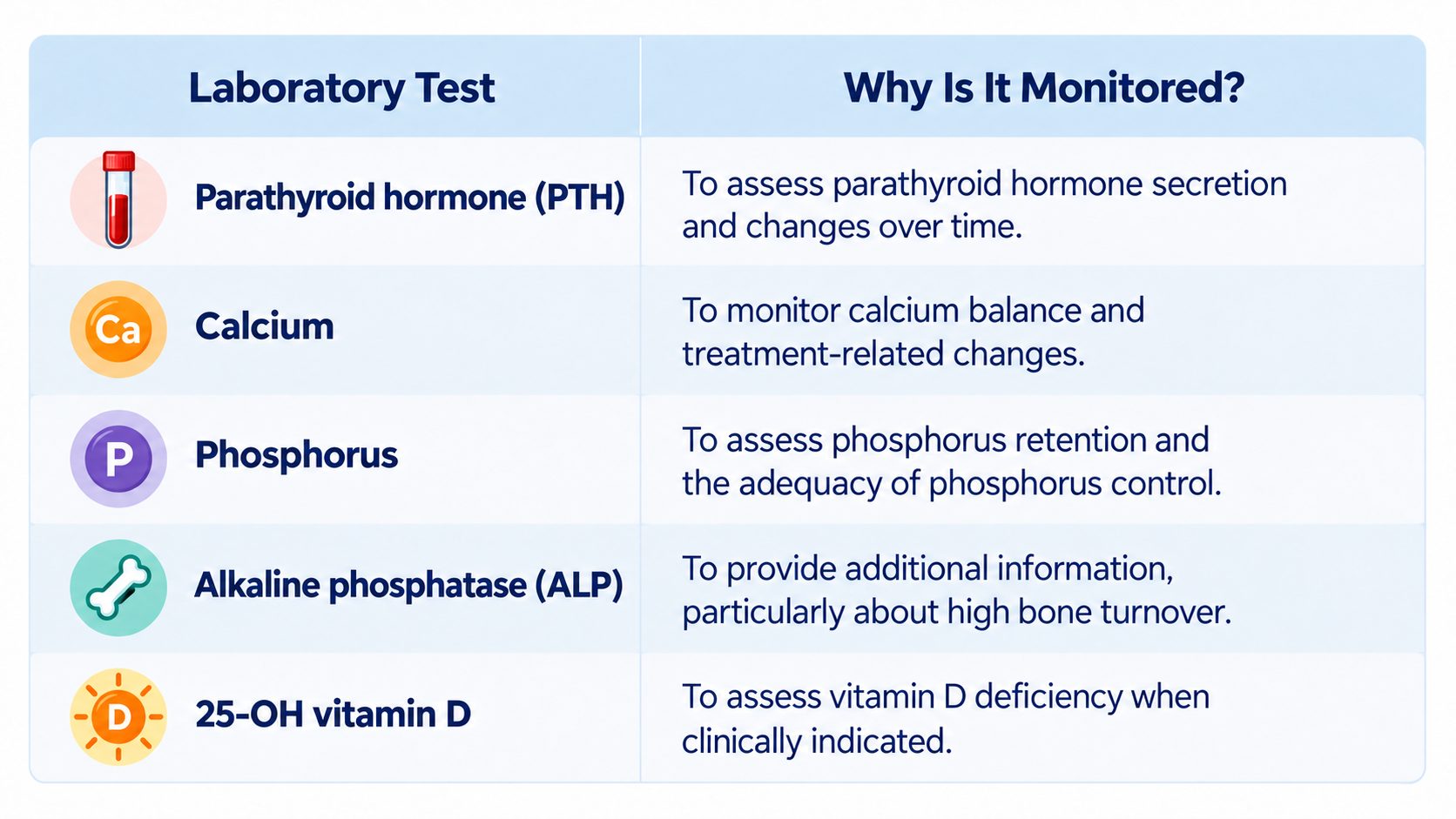
These tests alone may not be sufficient to establish a definitive diagnosis. Additional tests may be performed, particularly when it is necessary to determine the type of bone disease.
What Does a Continuously Rising PTH Level Mean?
A steady increase in parathyroid hormone (PTH) levels over time may suggest that secondary hyperparathyroidism is progressing or that the current treatment should be reevaluated.
For example, if a patient’s PTH levels are found to be 280, 470, and 760 pg/mL in three separate measurements, the upward trend should be taken into account.
However, when interpreting these values, the time interval between measurements, the laboratory method used, calcium and phosphorus results, and the patient’s treatment are also important factors.
It is not appropriate for a patient to adjust their medication dose on their own based on a single elevated PTH result.
What Is the Role of the Dialysis Team in Monitoring Parathyroid Hormone Levels?
Regular monitoring of mineral metabolism in dialysis patients is an important part of long-term patient care.
The patient follow-up processes conducted by physicians and the healthcare team at Göl Dialysis Center allow for the evaluation of laboratory results and, when necessary, the review of the treatment plan.
In patients with elevated parathyroid hormone levels, it is particularly important to monitor phosphorus levels, ensure proper medication use, maintain regular attendance at dialysis sessions, and evaluate dietary habits.
Patients should consult with their physicians, who monitor their laboratory results, and adhere to treatment recommendations, as this contributes to the management of bone and mineral metabolism disorders.
Frequently Asked Questions About Parathyroid Hormone in Dialysis Patients
Why do parathyroid hormone levels rise in dialysis patients?
In dialysis patients, parathyroid hormone levels typically rise due to phosphorus accumulation, decreased production of active vitamin D, and an imbalance in calcium levels. This condition is known as secondary hyperparathyroidism.
What should the PTH level be in dialysis patients?
According to the KDIGO guidelines, it is recommended that PTH levels in dialysis patients be maintained within a range of approximately 2–9 times the upper limit of normal for the test used. A definitive assessment should be made in conjunction with the patient’s other laboratory results.
Does high parathyroid hormone cause bone pain?
Yes. Prolonged, severe hyperparathyroidism can disrupt bone metabolism, leading to bone pain and an increased risk of fractures. However, not all bone pain is caused by elevated parathyroid hormone levels.
Does high parathyroid hormone cause itching?
A link has been reported between elevated PTH levels and itching, but a direct cause-and-effect relationship has not been definitively established. There may be many different causes of itching in dialysis patients.
Can high parathyroid hormone levels go down without medication?
In some patients, improving phosphorus control, reviewing the diet, and ensuring adequate dialysis treatment may help lower PTH levels. However, medication may be necessary, particularly in cases of overt secondary hyperparathyroidism.
If my PTH level is 1000, do I need surgery?
No. A PTH level of 1,000 pg/mL does not, by itself, require surgery. Surgical treatment is generally considered in cases where severe secondary hyperparathyroidism does not respond to appropriate medical treatment.
Does elevated parathyroid hormone levels resolve after a kidney transplant?
Following a successful kidney transplant, PTH levels may decrease as mineral metabolism normalizes. However, in some patients with long-standing parathyroid gland enlargement, elevated PTH levels may persist even after the transplant.
Can dialysis patients with high parathyroid hormone levels drink milk?
Although milk contains protein and calcium, it also contains phosphorus. Therefore, rather than banning it entirely, the amount consumed should be determined based on the patient’s phosphorus levels and nutritional needs.
Conclusion: Why Is Parathyroid Hormone Control Important in Dialysis Patients?
Elevated parathyroid hormone (PTH) levels in dialysis patients are one of the significant mineral and bone metabolism disorders that can develop as a result of chronic kidney disease.
If PTH levels remain uncontrolled for an extended period, this can negatively affect bone health. However, since excessively low PTH levels can also disrupt bone turnover, a balanced approach should be adopted in treatment.
Regular laboratory tests, proper phosphorus management, adequate dialysis treatment, and medication regimens prescribed by a physician play a key role in managing elevated parathyroid hormone levels.
Göl Dialysis Center aims to provide safe and patient-centered healthcare by regularly monitoring patients’ dialysis treatment processes with its experienced physicians and healthcare team.
To learn more about our dialysis treatment and patient follow-up services, please visit the Göl Dialysis Center website.